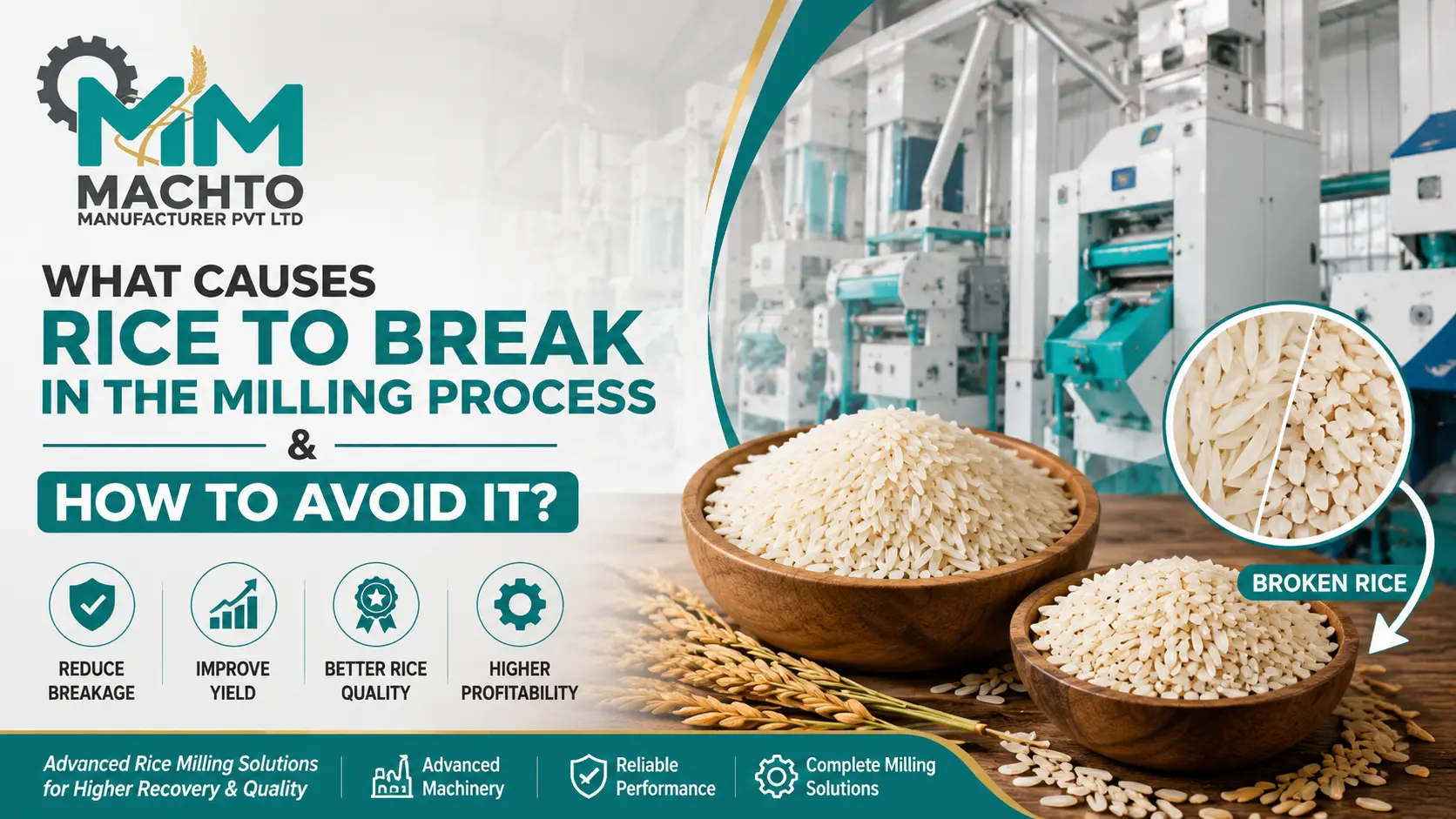
Rice milling is one of the most important stages in rice processing. The primary objective of milling is to produce clean, polished rice while maximizing the percentage of whole grains. However, one of the biggest challenges faced by rice mill owners is grain breakage during the milling process. Excessive broken rice not only reduces the market value of the final product but also affects profitability, customer satisfaction, and overall milling efficiency.
If you have ever wondered about the broken rice meaning, it simply refers to rice kernels that are fractured or broken during harvesting, drying, handling, or milling. Although broken rice is widely used in food processing, animal feed, brewing, and flour production, whole rice grains generally command a significantly higher market price. Therefore, minimizing breakage is essential for every rice processing business.
At Machto Manufacturer Private Limited, we understand the challenges faced by modern rice mills. With advanced rice milling machinery and innovative processing solutions, we help businesses improve grain recovery, reduce breakage, and achieve higher production efficiency.
Understanding Broken Rice Meaning
Before discussing the causes of grain breakage, it is important to understand the broken rice meaning in the milling industry.
Broken rice consists of rice kernels that are smaller than full-sized grains due to cracks or fractures that occur during harvesting, drying, transportation, storage, or milling. These grains still retain their nutritional value but are generally sold at lower prices than whole rice because of their appearance and market preference.
While broken rice has several industrial and food applications, excessive breakage directly impacts the profitability of rice mill owners because it lowers the yield of premium-quality whole rice.
Also Read: Paddy Parboiling Plant: Working Process Explained
Why Does Rice Break During the Milling Process?
Rice grains are naturally delicate. If they are exposed to improper handling or unsuitable processing conditions, they develop internal stress and cracks that eventually result in breakage during milling.
Below are the most common reasons for rice breakage.
1. Improper Moisture Content
Moisture content plays a critical role in maintaining grain strength. When paddy is excessively dry, the grains become brittle and break easily during dehusking and polishing. On the other hand, overly wet paddy creates processing difficulties and reduces milling efficiency.
Maintaining the recommended moisture level before milling helps preserve grain integrity and reduces unnecessary breakage.
2. Poor Drying Practices
Uneven or rapid drying creates internal stress within the rice kernels.
When grains are exposed to excessive heat or inconsistent drying temperatures, microscopic cracks develop inside the kernels. These cracks may not be visible initially but often cause grains to break during milling.
Using controlled drying systems ensures uniform moisture removal and protects grain quality.
3. Low-Quality Paddy
The quality of raw paddy directly affects milling results.
Immature, damaged, insect-infested, or weather-affected paddy is more likely to break during processing. Investing in high-quality raw material improves whole grain recovery and overall product quality.
4. Incorrect Machine Settings
Rice milling equipment must be properly adjusted according to the type of paddy being processed.
Excessive pressure inside dehuskers, whiteners, or polishers can damage grains and increase the percentage of broken rice.
Proper machine calibration helps achieve efficient milling while protecting grain quality.
5. Worn-Out Milling Equipment
Old rollers, damaged rubber rolls, worn screens, and improperly maintained polishing chambers can create unnecessary friction and mechanical stress.
Regular maintenance ensures smooth machine operation and minimizes grain damage throughout the milling process.
6. Excessive Polishing
While polished rice is visually appealing, excessive polishing removes more of the grain surface than necessary.
Over-polishing generates heat and friction, increasing the chances of grain breakage. Proper polishing balance helps maintain both appearance and grain strength.
7. Poor Grain Handling
Rice kernels may also crack before entering the milling line.
Rough transportation, improper loading, multiple handling stages, and careless storage can weaken grains, making them more susceptible to breaking during milling.
Gentle handling throughout the production process significantly reduces grain damage.
How to Avoid Rice Breakage During Milling
Reducing broken rice requires a combination of quality raw materials, proper processing techniques, and reliable machinery.
Use High-Quality Paddy
Always source mature and properly harvested paddy from trusted suppliers. Better raw material produces better milling results.
Maintain Optimum Moisture Levels
Monitor moisture carefully before milling. Proper moisture conditioning helps maintain grain strength and improves head rice recovery.
Invest in Advanced Rice Milling Machinery
Modern rice milling equipment is designed to reduce grain stress during processing.
Machines equipped with precision control systems allow operators to optimize pressure, polishing intensity, and grain flow, resulting in higher whole grain recovery.
Perform Regular Machine Maintenance
Routine inspection of rubber rolls, bearings, polishers, screens, elevators, and conveyors helps maintain consistent machine performance and prevents unnecessary grain damage.
Remove Impurities Before Milling
Pre-cleaning systems eliminate stones, dust, husk, straw, and foreign particles that can interfere with milling operations.
Cleaner paddy moves smoothly through the processing line, reducing machine wear and grain breakage.
Train Machine Operators
Even the best machinery requires skilled operators.
Proper training ensures that equipment settings are optimized according to paddy variety, moisture content, and production requirements.
Benefits of Reducing Broken Rice
Minimizing grain breakage offers several long-term advantages for rice mill owners.
- Higher recovery of whole rice grains
- Improved market value of finished rice
- Better customer satisfaction
- Increased profitability
- Reduced product wastage
- Improved operational efficiency
- Enhanced export-quality rice production
Every percentage increase in whole grain recovery can significantly improve the financial performance of a rice mill.
How Machto Manufacturer Private Limited Helps Rice Mills
We manufacture advanced rice milling machinery designed to improve productivity while reducing grain breakage. Our equipment is built using modern engineering techniques to ensure precision, durability, and consistent performance.
Our rice processing solutions are suitable for small, medium, and large-scale rice mills looking to increase efficiency and maximize whole grain recovery.
Our product range includes:
- Paddy Cleaning Machines
- Destoners
- Rice Dehuskers
- Paddy Separators
- Rice Polishers
- Graders
- Elevators
- Complete Rice Mill Plants
- Customized Rice Processing Solutions
Every machine is engineered to deliver reliable performance, lower maintenance costs, and improved milling quality.
Conclusion
Understanding the broken rice meaning and the factors responsible for grain breakage is essential for improving rice milling performance. Excessive broken rice is often the result of improper moisture levels, poor drying practices, low-quality paddy, incorrect machine settings, worn-out equipment, and rough grain handling.
By adopting modern milling techniques, maintaining machinery properly, and investing in advanced rice processing equipment, rice mill owners can significantly reduce breakage, improve whole grain recovery, and maximize profitability.
If you are planning to upgrade your rice mill or establish a new processing plant, Machto Manufacturer Private Limited offers reliable, high-performance rice milling machinery tailored to your production needs. Our innovative solutions help businesses produce premium-quality rice while improving efficiency, reducing operational losses, and achieving long-term success.