Paddy Pre Cleaner Machine Manufacturer
Before paddy enters the main rice milling process, it needs to be cleaned to remove unwanted materials such as straw, dust, chaff, leaves, and other field impurities. Effective pre-cleaning helps prepare the grain for subsequent processing and supports smoother mill operations. Machto Manufacturer Pvt. Ltd. offers machinery solutions for rice processing applications, helping rice mill operators select equipment according to their processing requirements and plant layout.
Choosing the right paddy pre-cleaner is important for maintaining a consistent material flow and reducing the amount of unwanted matter entering downstream equipment. The ideal machine depends on the quality of incoming paddy, the type of impurities present, the required processing capacity, and the overall configuration of the rice mill.
Why Is Paddy Pre-Cleaning Important Before Milling?
Paddy harvested from agricultural fields may contain a mixture of grain and foreign materials. If these impurities are not removed at the initial stage, they can interfere with material handling, increase cleaning requirements at later stages, and affect the overall efficiency of the milling line.
A paddy pre-cleaner separates suitable grain from unwanted materials using cleaning mechanisms such as screening and, depending on the machine design, air separation. This initial cleaning stage helps prepare paddy for further operations, including de-stoning, husking, separation, and polishing.
Pre-cleaning also supports better process management by reducing the quantity of unwanted material carried through the production line. However, the actual cleaning result depends on the incoming grain condition, machine configuration, operating settings, and maintenance.
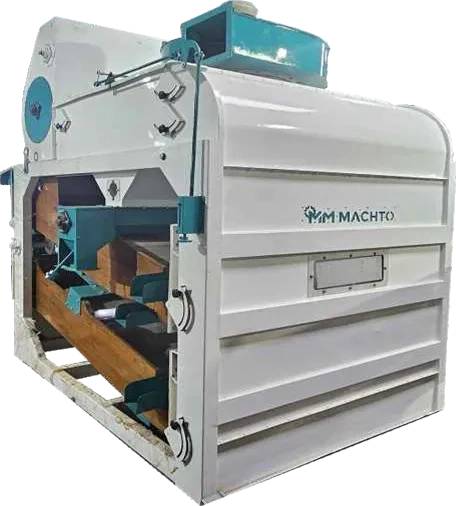
Features of Paddy Pre Cleaner Machine
- High Cleaning Efficiency – Effectively removes dust, straw, husk, stones, chaff, and other impurities from paddy before milling.
- Robust Construction – Manufactured using high-quality materials for long-lasting durability and reliable performance.
- High Processing Capacity – Designed to handle large volumes of paddy, making it suitable for commercial rice mills.
- Low Power Consumption – Energy-efficient operation helps reduce electricity costs while maintaining high productivity.
- Multi-Stage Cleaning System – Equipped with advanced sieves and air aspiration for thorough and accurate cleaning.
- Easy Operation & Maintenance – User-friendly design ensures simple operation, quick cleaning, and minimal maintenance.
- Improves Rice Quality – Removes unwanted impurities before processing, enhancing milling efficiency and the quality of the final rice output.
How Does a Paddy Pre Cleaner Machine Work?
The working process begins when uncleaned paddy is fed into the machine through an inlet or feeding arrangement. The grain then passes through a cleaning section designed to separate impurities according to differences in size, weight, or aerodynamic properties.
- Screening and Particle Separation- Screens with suitable openings help separate larger and smaller unwanted materials from the paddy. The screen arrangement depends on the machine design and the types of impurities the equipment is intended to remove.
- Air Separation- In machines equipped with an aspiration system, controlled airflow helps separate lighter materials such as dust, husk fragments, and chaff from the grain stream. The effectiveness of this process depends on airflow settings and the characteristics of the incoming material.
- Clean Grain Discharge- After the cleaning stages, the cleaned paddy is discharged for transfer to the next stage of the milling process. Separated impurities are collected or discharged through designated outlets.
Correct feeding, appropriate machine settings, and regular inspection are important for achieving consistent cleaning performance without unnecessary grain loss.
Important Factors to Consider When Selecting a Paddy Pre-Cleaner
A suitable machine should match the operating conditions of the rice mill rather than being selected on price alone. Consider the following factors before making a purchase.
- Processing Capacity: Match the machine’s rated throughput with the rice mill’s required processing rate. Actual performance can vary according to paddy quality and impurity levels.
- Type of Impurities: Assess whether the incoming material mainly contains dust, straw, leaves, chaff, or other foreign matter. This helps determine the appropriate cleaning arrangement.
- Cleaning Mechanism: Review the screening system, aspiration arrangement, and separation stages provided in the machine.
- Plant Layout: Check the inlet height, discharge arrangement, available installation space, and compatibility with conveyors or elevators.
- Maintenance Access: Screens, bearings, air passages, and other serviceable components should be accessible for inspection and cleaning.
- Power and Operating Requirements: Confirm the motor specifications, power supply, and operating requirements against the mill’s available infrastructure.
Discussing these points with the machinery supplier helps establish whether the proposed equipment is appropriate for the intended application.
Paddy Pre-Cleaner vs. Paddy Cleaner: What Is the Difference?
Although the terms are sometimes used interchangeably, a pre-cleaner generally refers to equipment used for the initial removal of foreign materials before the main processing stages. A cleaner may refer to equipment used for a further or more specific cleaning operation, depending on the rice mill’s process design.
The distinction is not universal because manufacturers may use different product names and machine configurations. Buyers should therefore compare the actual cleaning functions, separation mechanisms, capacity, and expected output rather than relying only on the equipment’s name.
For a complete rice milling line, the cleaning stages should be planned according to the condition of incoming paddy and the quality requirements of the finished product.
Integrating a Paddy Pre Cleaner into a Rice Mill
A pre-cleaning machine works most effectively when it is properly integrated with the rest of the processing line. The feeding system should supply paddy at a controlled rate, while the discharge arrangement should transfer the cleaned grain to the next operation without creating unnecessary bottlenecks.
Plant designers should also consider the space needed for maintenance, safe access for operators, dust management, and the collection of separated impurities. If the machine is connected to elevators or conveyors, their capacities should be compatible with the expected material flow.
An appropriately planned layout can make routine operation easier and help avoid interruptions caused by poor material handling or difficult maintenance access.
Maintenance Practices for Consistent Cleaning Performance
Routine maintenance helps preserve the performance and service life of a paddy pre-cleaner. Operators should follow the manufacturer’s maintenance schedule and inspect the machine according to its operating conditions.
Key maintenance activities include checking screens for blockage or damage, inspecting bearings and drive components, cleaning dust accumulation, and examining fasteners and connections. Where an aspiration system is fitted, airflow passages and associated components should also be checked.
Before opening covers or carrying out maintenance, the machine should be shut down and isolated from its power source according to the site’s safety procedures. Worn parts should be replaced with compatible components, and operating adjustments should follow the manufacturer’s instructions.
Paddy Pre Cleaner Machine Manufacturers for Rice Processing Units
When evaluating Paddy Pre Cleaner Machine Manufacturers, rice mill owners should look beyond the initial purchase price. Machine suitability, cleaning performance, throughput, maintenance access, installation requirements, and after-sales support all contribute to the overall value of the equipment.
Machto Manufacturer Pvt. Ltd. serves the rice processing machinery sector. Buyers can discuss their plant capacity, incoming paddy condition, cleaning requirements, and existing machinery arrangement to identify an appropriate solution for their facility.
Before finalising an order, request the machine’s technical specifications, rated capacity, power requirements, installation details, warranty terms, and maintenance recommendations. These details make it easier to compare different equipment options on a consistent basis.
Frequently Asked Questions
What is a paddy pre cleaner machine used for?
A paddy pre-cleaner removes initial impurities such as straw, dust, chaff, leaves, and other foreign materials from paddy before further rice milling operations.
How does a paddy pre-cleaner remove impurities?
Depending on its design, the machine uses screens and air separation to separate unwanted materials from grain based on differences in size, weight, or aerodynamic properties.
Is a paddy pre-cleaner necessary for a rice mill?
Pre-cleaning is an important step in many rice milling lines because it helps reduce foreign materials entering downstream equipment. The required configuration depends on the mill’s process and incoming paddy quality.
How do I choose the right paddy pre-cleaner capacity?
Consider the mill’s required throughput, the impurity level in incoming paddy, and the capacity of connected conveyors and downstream equipment. Confirm the rated capacity with the manufacturer.
What maintenance does a paddy pre-cleaner require?
Common maintenance includes inspecting and cleaning screens, checking bearings and drive components, removing dust accumulation, and servicing the aspiration system where fitted.
What should I check before purchasing a paddy pre-cleaner?
Review the cleaning mechanism, rated capacity, power requirements, installation dimensions, maintenance access, spare-parts availability, warranty, and compatibility with your rice milling line.