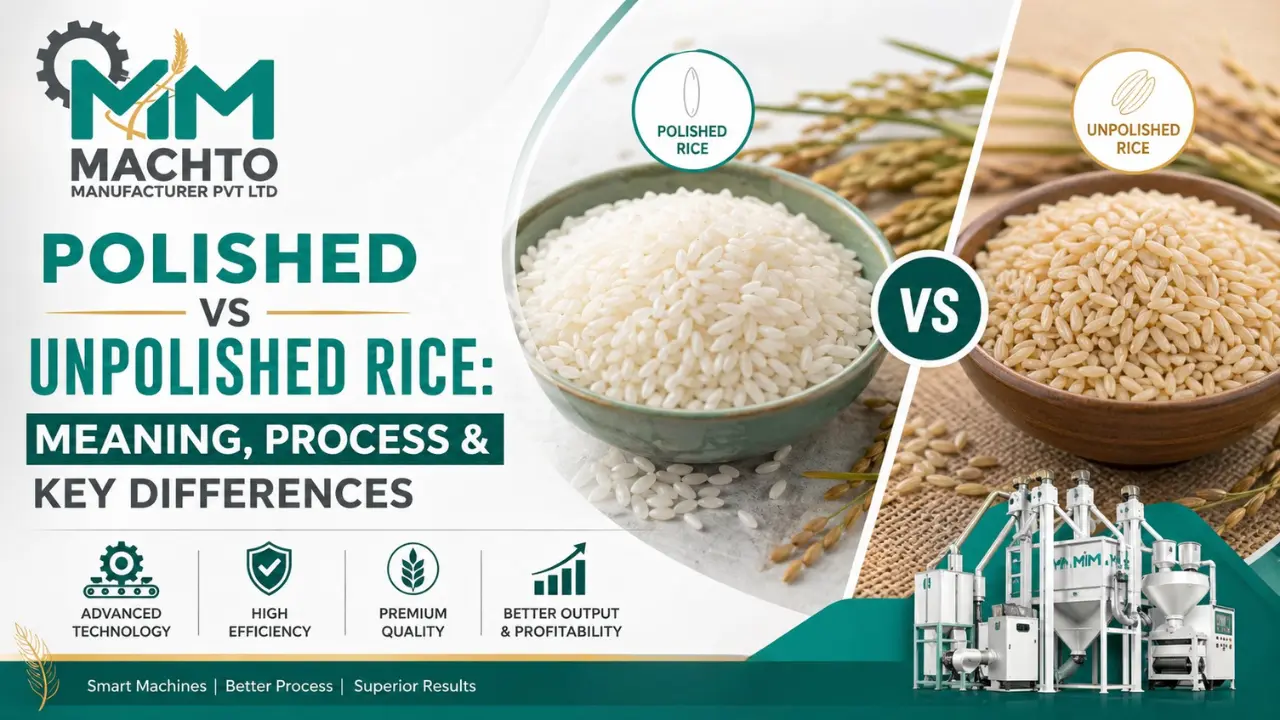
Rice is one of the most essential staple foods consumed across the world, especially in countries like India. However, not all rice is the same. When you visit the market, you’ll often come across two main types — polished rice and unpolished rice. Many people consume rice daily but are not fully aware of what these terms actually mean.
In this blog, we will clearly explain polished rice vs unpolished rice, including their meaning, processing methods, and key differences so that you can make an informed choice.
What is Polished Rice?
Before understanding the difference, it is important to know what is polished rice. Polished rice is white rice that has gone through an intensive milling process where the outer bran and germ layers are removed. This process gives rice its smooth, shiny appearance and increases its shelf life.
Polished Rice Meaning
The term polished rice meaning refers to rice grains that have been processed to remove their outer layers, resulting in a refined, white, and glossy product. This polishing is usually done using modern rice milling machines. Polished rice is widely consumed because of its:
- Attractive appearance
- Soft texture after cooking
- Longer storage life
However, during the polishing process, some essential nutrients are also lost.
Also Read: Rice Mill Capacity & Cost in India: Complete Ton-Wise Investment Guide
What is Unpolished Rice?
Unpolished rice, often referred to as brown rice, is rice that retains its outer bran layer. It undergoes minimal processing, which helps preserve its natural nutrients. Unlike polished rice, unpolished rice has a slightly rough texture and a natural brown or beige color. It is considered a healthier option because it contains more fiber, vitamins, and minerals.
Polished Rice vs Unpolished Rice: Processing Method
The major difference between these two types of rice lies in how they are processed.
Polished Rice Processing
The production of polished rice involves multiple steps:
- Cleaning – Removal of dust, stones, and impurities
- Dehusking – Removing the outer husk layer
- Milling – Removing bran and germ layers
- Polishing – Giving a shiny and smooth finish
This entire process makes the rice look more appealing but reduces its nutritional value.
Unpolished Rice Processing
Unpolished rice goes through fewer steps:
- Cleaning
- Dehusking
The bran layer remains intact, which helps retain nutrients and natural fiber.
Key Differences Between Polished and Unpolished Rice
Understanding the polished vs unpolished rice comparison helps in choosing the right type based on your needs.
- Appearance- Polished rice is white, smooth, and shiny, while unpolished rice has a dull, brownish look due to the presence of bran.
- Nutritional Value- Unpolished rice is richer in fiber, vitamins (especially B-complex), and minerals. In contrast, polished rice loses many nutrients during processing.
- Taste and Texture- Polished rice is softer and cooks faster, making it more popular in households. Unpolished rice has a slightly chewy texture and nutty flavor.
- Shelf Life- Polished rice has a longer shelf life because the oil-rich bran layer is removed. Unpolished rice has a shorter storage life due to natural oils present in the bran.
- Health Benefits- Unpolished rice is considered healthier as it supports digestion and helps maintain stable blood sugar levels. Polished rice, though easier to digest, offers fewer health benefits.
Which One Should You Choose?
The choice between polished rice vs unpolished rice depends on your lifestyle, taste preference, and health goals.
If you prefer soft, easy-to-cook rice with longer storage life, polished rice is a convenient option.
If you are focused on nutrition and overall health, unpolished rice is a better choice.
Many people today are gradually shifting towards unpolished rice due to increasing health awareness.
Role of Rice Processing Machines in Quality Production
Machto Manufacturer Pvt. Ltd. understands that the quality of rice largely depends on the efficiency of the processing machinery. Advanced rice milling and polishing machines play an important role in maintaining grain quality while ensuring high production output.
Modern machines are designed to:
- Reduce grain breakage
- Maintain uniform polishing
- Improve efficiency and productivity
- Ensure hygienic processing
Whether producing polished or unpolished rice, the right technology ensures consistent quality and better market value.
Common Myths About Polished Rice
There are several misconceptions surrounding polished rice that need clarification.
Myth 1: Polished rice is completely unhealthy
While it has fewer nutrients than unpolished rice, polished rice still provides energy and is safe for consumption.
Myth 2: Unpolished rice is difficult to cook
Although it takes slightly longer to cook, proper soaking can make the process easier.
Myth 3: Only unpolished rice is good for health
Both types of rice have their own advantages and can be part of a balanced diet.
Conclusion
Understanding the difference between polished rice vs unpolished rice helps consumers make better dietary choices. While polished rice is preferred for its texture and convenience, unpolished rice stands out for its nutritional benefits.
Knowing what is polished rice, its meaning, and how it differs from unpolished rice allows you to choose the right option based on your needs. With advancements in rice processing technology, both types can be produced efficiently while maintaining quality.
Machto Manufacturer Pvt. Ltd. are committed to delivering advanced solutions for rice processing that ensure high efficiency, superior quality, and better output for our clients.