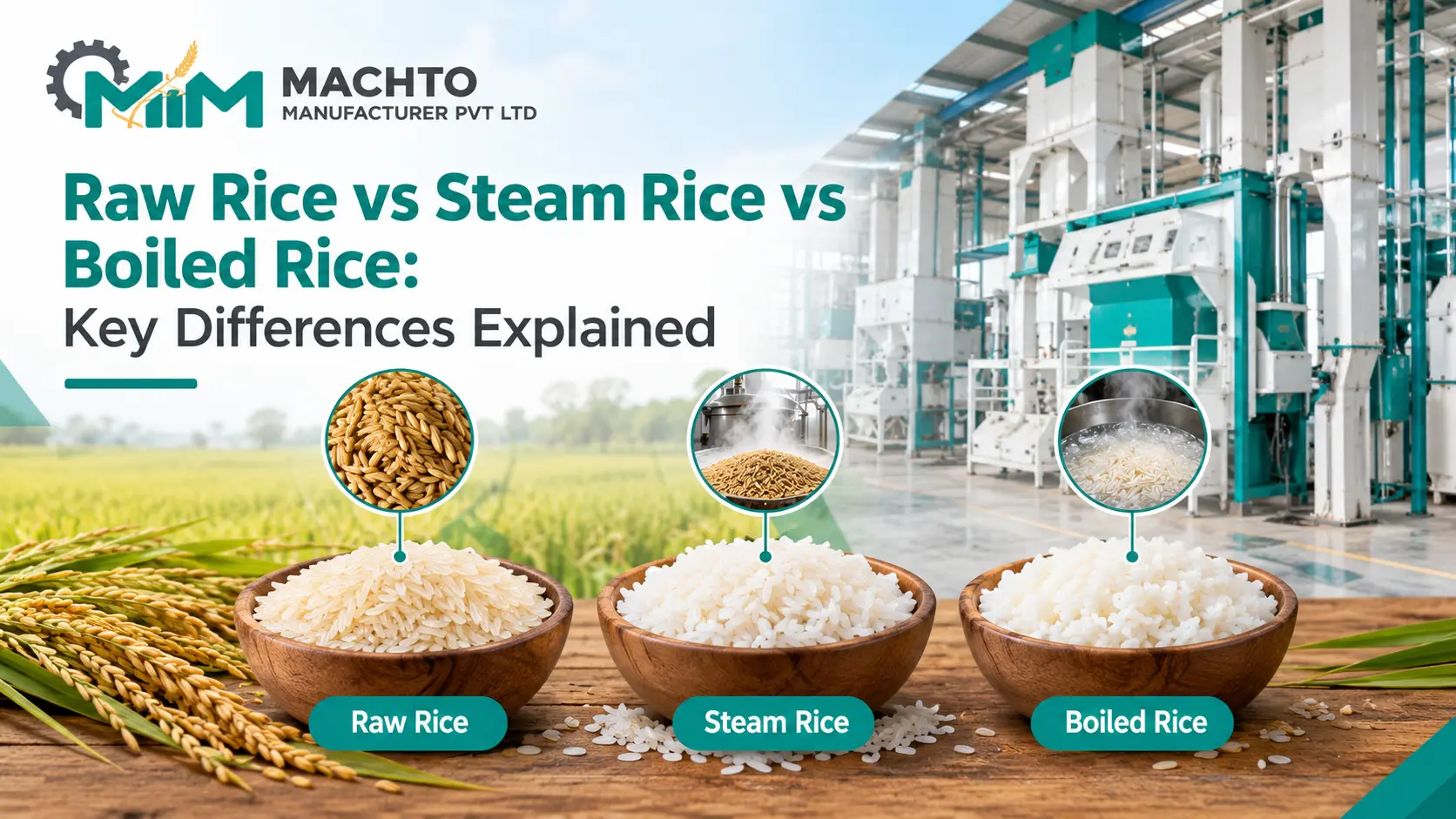
Rice processing involves several important stages, and the method used before milling can significantly influence the final rice quality. For rice mill owners, processors, traders, and businesses planning a new rice processing unit, understanding the difference between raw rice, steam rice, and boiled rice is important.
Although these rice varieties may look similar after milling, their processing methods are different. These differences can affect grain strength, appearance, cooking characteristics, milling recovery, and the type of machinery required.
Machto Manufacturer Private Limited provides rice mill machinery and processing solutions designed to support efficient and consistent rice production. In this guide, we will explain raw rice vs steam rice, steam rice vs raw rice, and steam rice vs boiled rice in simple terms, while also looking at how processing methods connect with rice mill machinery.
What Is Raw Rice?
Raw rice is rice that is milled without undergoing a parboiling or steaming treatment before the milling process. After harvesting, paddy is cleaned, dried to the required moisture level, and then processed through rice milling equipment to remove the husk and bran layers.
The basic process generally involves:
Paddy Cleaning → De-stoning → Husking → Paddy Separation → Whitening → Polishing → Grading → Packing
Raw rice processing is commonly preferred when the market requires rice with a natural appearance and a particular cooking texture.
One important consideration is that the quality of raw rice depends heavily on the condition of the incoming paddy. Moisture content, variety, harvesting conditions, drying quality, and milling settings can all influence broken rice percentage and overall recovery.
For this reason, properly selected and adjusted rice mill machinery plays an important role in producing consistent raw rice.
Also Read: Bucket Elevator: Working Principle, Types, Components & Applications
What Is Steam Rice?
So, what is steam rice? Steam rice is rice produced from paddy that undergoes a steaming or hydrothermal treatment before milling. The purpose of this treatment is to modify the grain structure and improve its resistance to breakage during subsequent milling.
In a typical steam rice process, paddy is first cleaned and then subjected to controlled steaming. After steaming, the paddy is dried and conditioned before entering the milling section.
A simplified process can be represented as:
Paddy Cleaning → Steaming → Drying → Conditioning → Husking → Whitening → Polishing → Grading → Packing
The exact processing conditions vary according to paddy variety, moisture level, plant design, and the desired characteristics of the finished rice.
Steam processing requires specialized equipment and proper process control. Uneven steaming or drying can affect grain quality, colour, moisture distribution, and milling performance.
Raw Rice vs Steam Rice
The main difference between steam rice and raw rice is the treatment given to the paddy before milling.
Raw rice does not receive a steaming treatment before milling, whereas steam rice is subjected to controlled steaming and drying before it reaches the milling section.
Here are some key differences:
| Factor | Raw Rice | Steam Rice |
|---|---|---|
| Pre-milling treatment | No steaming | Steaming is carried out |
| Processing complexity | Comparatively simpler | Requires additional processing stages |
| Grain condition | Natural grain structure | Grain structure is modified through heat and moisture |
| Milling behaviour | Depends strongly on paddy quality | Proper processing can improve resistance to breakage |
| Machinery requirement | Standard rice milling line | Requires steaming and drying equipment along with milling machinery |
| Processing time | Generally shorter | Additional time required for steaming, drying, and conditioning |
| Product characteristics | Natural appearance and cooking behaviour | Different texture and cooking characteristics |
The choice between raw and steam rice production depends on the target market, paddy variety, available infrastructure, and desired product characteristics.
Steam Rice vs Boiled Rice
People sometimes use the terms steam rice and boiled rice interchangeably, but the processing method can be different depending on the plant and process used.
In general, steam rice vs boiled rice can be understood by looking at how heat and water are applied to the paddy.
In steam processing, steam is used to transfer heat and moisture to the paddy under controlled conditions. In a boiling or parboiling process, paddy may be soaked and heated in hot or boiling water before steaming and drying stages.
The objective of both methods is to condition the grain before milling, but the process configuration, equipment, temperature, moisture level, and treatment duration can vary.
For a commercial rice mill, these parameters need to be carefully controlled because excessive or insufficient treatment can affect the appearance and milling quality of the finished rice.
Why Processing Method Matters in a Rice Mill
Choosing a rice processing method is not simply a matter of producing a particular type of rice. It also determines the machinery, plant layout, utilities, processing time, and quality-control requirements.
A raw rice mill may primarily require cleaning, destoning, husking, separation, whitening, polishing, grading, and packing equipment.
A steam or parboiled rice plant needs additional sections for processes such as soaking or steaming, drying, and conditioning before the paddy enters the milling line.
This means a rice mill should be planned according to the final product rather than selecting machines individually without considering the complete process.
Role of Rice Mill Machinery in Rice Quality
The quality of the final rice depends on both the condition of the paddy and the performance of the machinery used at each stage.
For example, a good cleaning system helps remove unwanted materials before milling. Efficient husking reduces unnecessary grain damage, while proper paddy separation helps separate unhusked paddy from brown rice.
Whitening and polishing equipment then removes the required bran layers and improves the appearance of the finished rice. Grading equipment separates grains according to size and helps create a more uniform final product.
For steam or boiled rice, the pre-treatment and drying sections are equally important. Moisture needs to be managed carefully before the paddy reaches the milling machinery.
At Machto Manufacturer Private Limited, the focus is on providing rice milling machinery and solutions that support the different stages of rice processing.
Which Rice Processing Method Is Better?
There is no single answer to which method is better. The right option depends on the intended product, market demand, paddy variety, investment, plant capacity, and available processing facilities.
Raw rice processing can be suitable for businesses targeting markets where naturally processed rice is preferred.
Steam or parboiled rice processing may be more appropriate where the market demands rice with specific grain characteristics and cooking behaviour.
The important point is to design the complete processing line according to the selected production method.
How Machto Supports Rice Mill Projects
Setting up a rice mill requires more than purchasing individual machines. The complete plant needs to be considered, including material flow, machine capacity, processing sequence, space requirements, utilities, and final product specifications.
Machto Manufacturer Private Limited specializes in rice mill machinery and can support rice processing requirements with machinery designed around the intended application.
Whether a project involves raw rice milling or requires additional processing for steam or boiled rice, selecting suitable equipment and maintaining an efficient process flow can help improve productivity and product consistency.
A properly planned rice milling system can also help reduce unnecessary grain handling and support better control over milling losses and finished rice quality.
Final Thoughts
Understanding raw rice vs steam rice and steam rice vs raw rice helps rice mill owners make better decisions about processing methods and machinery. Raw rice is milled without pre-treatment, while steam rice involves controlled steaming and drying before milling. Boiled or parboiled rice may involve soaking and heat treatment before the grain reaches the milling section.
These differences directly influence the design of a rice processing plant. From paddy cleaning and husking to drying, whitening, polishing, and grading, every stage needs to work together for consistent results.
For businesses planning or upgrading a rice mill, the right machinery should be selected according to the desired rice variety, production capacity, paddy characteristics, and market requirements.
Machto Manufacturer Private Limited provides rice mill machinery and processing solutions for businesses looking to develop efficient and practical rice processing operations. A well-designed rice milling line can help transform quality paddy into a consistent finished product while supporting efficient production.