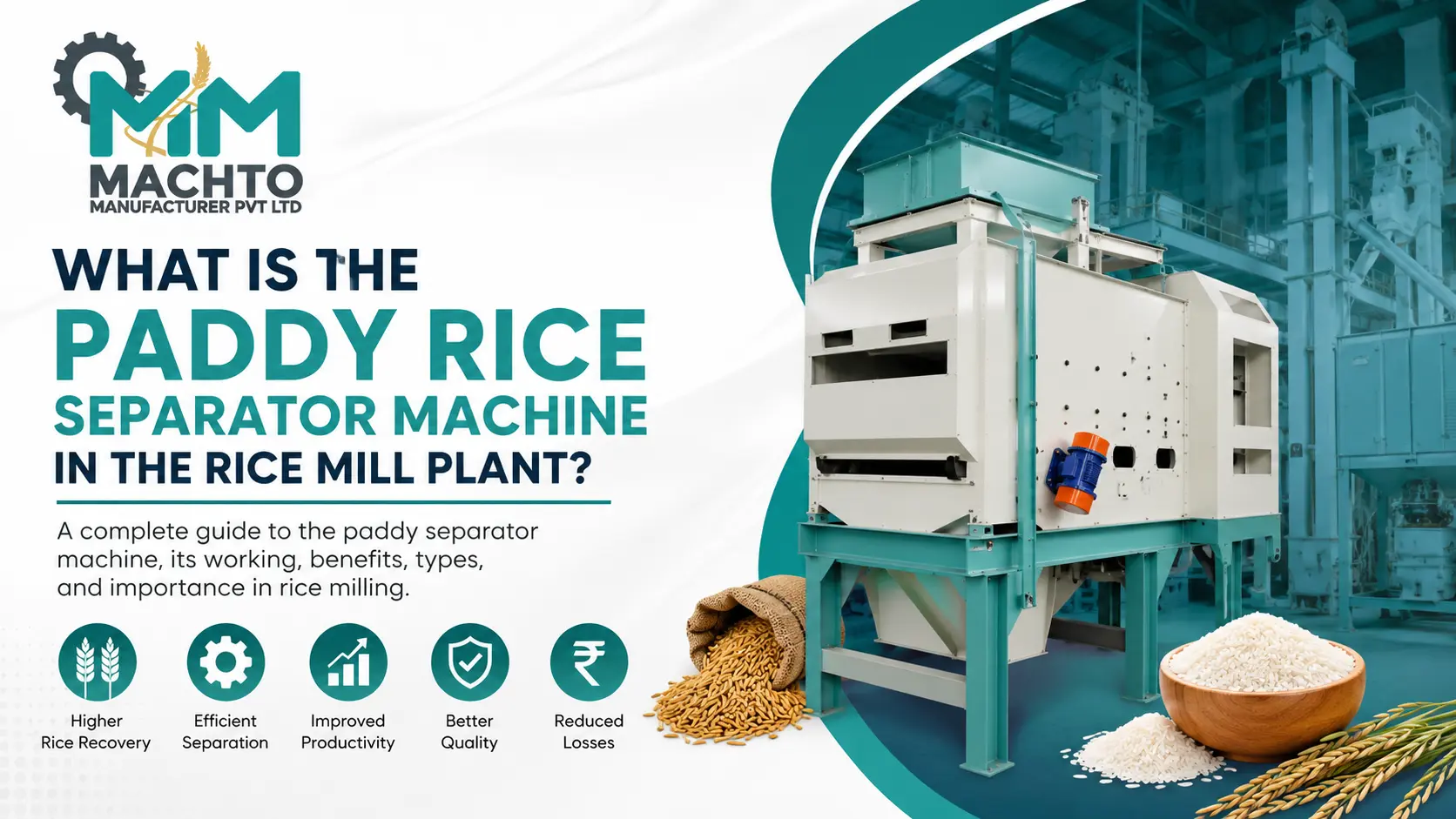
The rice milling process is a systematic procedure that turns harvested paddy into quality rice which can be eaten. There are various machines used in the modern rice mill to make the milling process more productive, minimize loss of grains, and ensure the quality of rice produced. One of the machines is the paddy separator machine which is used in the rice milling process.
In this blog, we will discuss what a paddy separator machine is, how it works, its benefits, applications, and why it is an essential component of every modern paddy rice mill.
Understanding the Paddy Rice Separator Machine
A paddy separator machine is a specialized machine used in rice mills to separate brown rice from paddy after the husking process. During de-husking, not all paddy grains are converted into brown rice. A mixture of brown rice and unhusked paddy remains, which needs to be separated before further processing.
The rice separator machine efficiently distinguishes between these two materials based on their physical characteristics, such as size, weight, surface texture, and density. Once separated, the unhusked paddy is returned to the husker for reprocessing, while the brown rice moves forward to polishing and grading stages. Without a paddy separator, rice mills would face significant grain losses, reduced milling efficiency, and lower-quality rice production.
Also Read: Modern Rice Milling Process: Meaning, Steps and Flow Chart
Why is a Paddy Separator Important in a Rice Mill Plant?
A rice milling plant consists of multiple processing stages, including cleaning, de-stoning, husking, separation, whitening, polishing, grading, and packaging. The paddy separator machine acts as a bridge between the husking and whitening processes.
Its importance includes:
- Improves milling efficiency.
- Reduces grain breakage.
- Increases rice recovery rates.
- Enhances final rice quality.
- Minimizes production losses.
- Ensures smooth operation of downstream equipment.
In a modern paddy rice mill, a separator machine is considered one of the most important machines for maintaining consistent production quality.
How Does a Paddy Separator Machine Work?
The working principle of a paddy separator is based on the difference in physical properties between brown rice and paddy grains.
1. Feeding Process
The mixture of brown rice and unhusked paddy enters the machine through a feeding system.
2. Separation Stage
The machine uses specially designed trays, oscillating decks, or gravity-based mechanisms to separate grains. Since paddy grains and brown rice have different friction coefficients and densities, they move differently on the separator surface.
3. Collection Process
The machine divides the mixture into three categories:
- Pure brown rice
- Pure paddy
- Mixed grains
The separated paddy is sent back to the husker, while the brown rice proceeds for further processing.
4. Reprocessing of Mixed Grains
The mixed fraction can be recycled through the separator again to maximize separation efficiency.
This process ensures minimal wastage and higher rice recovery in the milling operation.
Major Components of a Paddy Rice Separator Machine
A high-quality paddy rice machine consists of several important components:
- Feed Hopper- Ensures uniform feeding of grain mixtures into the machine.
- Oscillating Separation Tray- Facilitates effective separation based on grain movement characteristics.
- Drive Mechanism- Provides smooth vibration and oscillation for efficient grain segregation.
- Collection Chambers- Collect separated paddy, brown rice, and mixed grains separately.
- Control Panel- Allows operators to adjust machine settings for optimal performance. These components work together to deliver accurate separation and improved productivity.
Benefits of Using a Paddy Separator Machine
- Higher Rice Recovery- The primary advantage of a paddy separator machine is improved rice recovery. By separating unhusked grains efficiently, mills can maximize production output.
- Better Product Quality- Proper separation prevents paddy grains from entering later processing stages, resulting in cleaner and more uniform rice.
- Reduced Grain Loss- Accurate separation minimizes wastage and improves overall profitability.
- Increased Operational Efficiency- The machine enables continuous processing and reduces manual intervention.
- Lower Production Costs- By recycling unhusked grains for re-husking, mills achieve better utilization of raw materials.
- Improved Equipment Performance- Downstream machines such as whiteners and polishers perform more effectively when only properly separated rice enters the system.
Applications of Paddy Separator Machines
The rice separator machine is widely used in various rice processing facilities, including:
- Commercial Rice Mills- Large-scale rice mills rely on separator machines for continuous production.
- Small and Medium Rice Processing Units- These machines help smaller mills improve rice quality and operational efficiency.
- Integrated Rice Milling Plants- Modern milling plants use separators as a standard component of the production line.
- Agricultural Processing Centers- Farmers and cooperatives use separator machines to process harvested paddy effectively.
Regardless of plant size, a paddy separator significantly enhances processing performance.
Types of Paddy Separator Machines
Different rice mills use various types of separators depending on production capacity and processing requirements.
- Gravity Paddy Separator- Uses density differences between paddy and rice for separation.
- Tray-Type Paddy Separator- Employs oscillating trays to separate grains efficiently.
- Compartment Paddy Separator- Uses multiple compartments to increase separation accuracy.
- High-Capacity Automatic Separator- Designed for large industrial rice mills with continuous operation requirements.
Selecting the right separator depends on plant capacity, production goals, and desired efficiency levels.
Factors to Consider When Choosing a Paddy Rice Machine
When purchasing a paddy rice machine, consider the following factors:
- Production Capacity- Choose a machine that matches your mill’s daily processing requirements.
- Separation Efficiency- Higher separation accuracy leads to better rice quality and recovery.
- Power Consumption- Energy-efficient machines help reduce operational costs.
- Durability- Robust construction ensures long-term reliability.
- Ease of Maintenance- Machines with simple maintenance requirements reduce downtime.
- Manufacturer Support- Selecting a trusted manufacturer ensures access to technical assistance and spare parts.
Maintenance Tips for Paddy Separator Machines
Proper maintenance helps maintain machine performance and extends equipment lifespan.
- Regular Cleaning- Remove dust, husk particles, and grain residues regularly.
- Inspect Moving Parts- Check bearings, belts, and drive systems for wear.
- Lubricate Components- Follow manufacturer recommendations for lubrication schedules.
- Monitor Machine Settings- Ensure proper adjustment for maximum separation efficiency.
- Schedule Preventive Maintenance- Routine inspections prevent unexpected breakdowns and costly repairs.
By following these practices, rice mill operators can achieve consistent and reliable machine performance.
The Future of Paddy Separator Technology
Rice milling technology continues to evolve with increasing automation and precision. Modern paddy separator machines now feature:
- Advanced automation systems
- Higher separation efficiency
- Lower energy consumption
- Intelligent monitoring controls
- Reduced maintenance requirements
These innovations help rice mill operators improve productivity while maintaining superior rice quality standards.
Conclusion
The paddy separator machine is one of the most essential machines in a modern rice milling plant. It efficiently separates unhusked paddy from brown rice after the husking process, ensuring higher rice recovery, better product quality, and improved operational efficiency. Whether used in a small processing unit or a large industrial paddy rice mill, the separator plays a vital role in maximizing profitability and reducing production losses.
Investing in a high-quality rice separator machine not only improves milling performance but also ensures consistent output quality. As rice processing technology continues to advance, the importance of efficient paddy rice machine solutions will only continue to grow, making them a valuable asset for every rice milling operation.