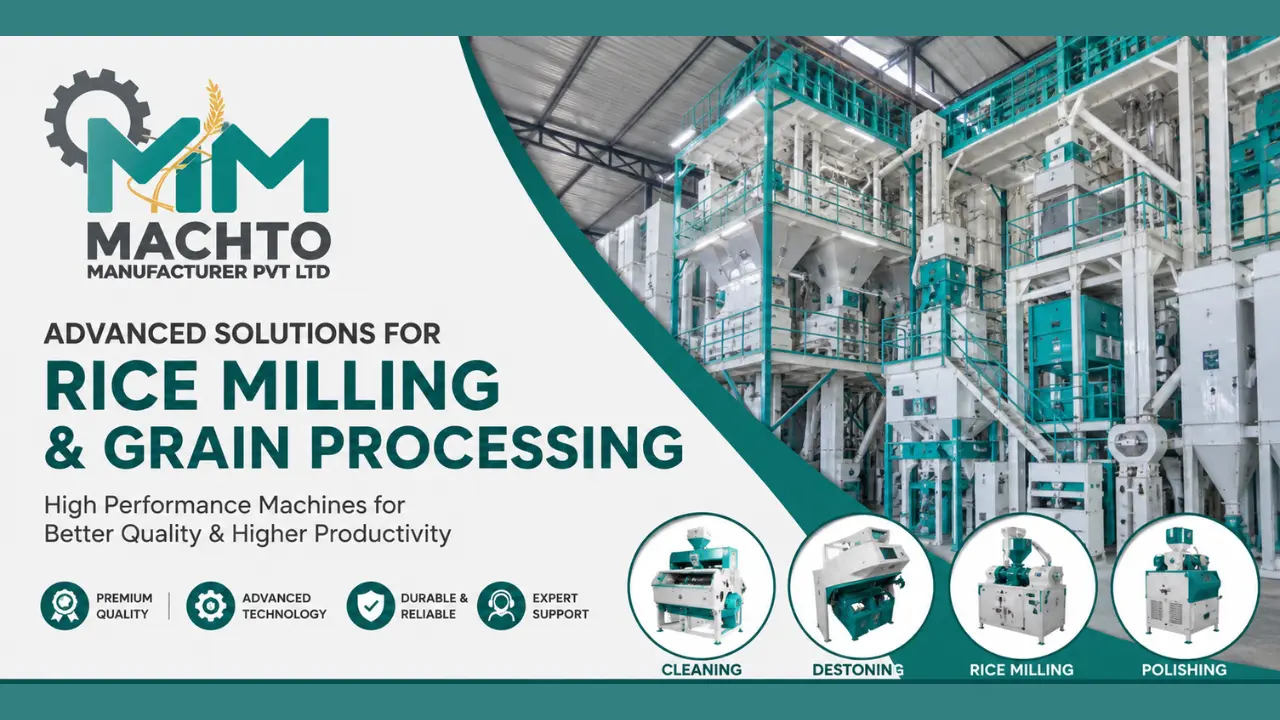
Rice is one of the most important staple foods consumed across the world. To transform harvested paddy into high-quality edible rice, it must undergo a series of carefully controlled processing operations. Modern rice milling technology has significantly improved the quality, efficiency, and productivity of rice processing compared to traditional methods.
Understanding the modern rice milling process helps rice mill owners, farmers, and food processing businesses improve production efficiency while maintaining superior grain quality. In this blog, we will discuss the milling of rice meaning, the various rice processing steps, and the complete flow of a modern rice mill operation.
What is Rice Milling?
Rice milling is the process of removing husk and bran layers from paddy grains to produce clean, polished, and edible rice. The primary objective of the milling of rice is to maximize the recovery of whole rice kernels while minimizing grain breakage and quality loss.
Modern rice mills use advanced machinery to ensure efficient processing and consistent output quality. Unlike traditional methods, automated rice milling systems provide better cleaning, separation, polishing, and grading results.
Read more about types of rice mill machinery
Milling of Rice Meaning
The milling of rice meaning refers to the complete process of converting harvested paddy into market-ready rice through a series of cleaning, dehusking, separation, polishing, grading, and packaging operations.
The purpose of rice milling is to:
- Remove impurities from paddy.
- Separate husk from rice grains.
- Improve rice appearance and quality.
- Increase the market value of rice.
- Reduce grain losses during processing.
- Produce rice suitable for consumer consumption.
A well-designed paddy rice mill ensures maximum yield and better profitability for rice mill operators.
Importance of Modern Rice Milling
Modern rice milling technology plays a crucial role in the agricultural and food processing industry. Advanced milling systems improve productivity while maintaining grain quality throughout the processing cycle.
Benefits of modern rice milling include:
- Higher rice recovery rates.
- Reduced grain breakage.
- Improved rice quality.
- Better polishing and grading.
- Increased operational efficiency.
- Lower labor requirements.
- Consistent production output.
These advantages make modern rice milling systems an essential investment for commercial rice processors.
Rice Processing Steps in a Modern Rice Mill
The modern rice milling process consists of several stages that work together to convert raw paddy into polished rice.
1. Pre-Cleaning
The first step in a rice mill is pre-cleaning. Freshly harvested paddy often contains dust, straw, stones, leaves, and other foreign materials. Pre-cleaning equipment removes these impurities before further processing begins. This step protects downstream machinery and improves processing efficiency.
2. Destoning
After cleaning, the paddy passes through a destoner machine.
This equipment removes heavier contaminants such as stones, mud balls, and metal particles that may have similar sizes to paddy grains. Destoning ensures cleaner raw material and prevents damage to processing equipment.
3. Paddy Husking
The next stage involves removing the outer husk from the paddy grain. A rubber roll husker is commonly used in modern paddy rice mill systems to separate husk from brown rice efficiently. Proper husking is essential because incomplete husk removal can affect the quality of the final product.
4. Paddy Separation
After husking, the mixture contains both brown rice and unhusked paddy. A paddy separator separates these materials and sends the unhusked grains back for reprocessing. This stage improves milling efficiency and maximizes rice recovery.
5. Whitening Process
The whitening stage removes the bran layers from brown rice. Modern rice whitening machines carefully remove bran while minimizing grain breakage. The result is clean white rice with improved appearance. This is one of the most important rice processing steps in the milling cycle.
6. Rice Polishing
Rice polishing improves the appearance and texture of rice grains. Advanced rice polishers provide a smooth and glossy finish that enhances consumer acceptance and market value. Polishing also helps improve the overall presentation of the rice.
7. Grading
After polishing, rice is graded based on size, shape, and quality. Rice graders separate whole grains from broken rice and classify them into different categories. Proper grading helps maintain product consistency and allows rice millers to meet specific market requirements.
8. Color Sorting
Color sorting machines use optical technology to detect and remove discolored, damaged, or defective grains. This stage significantly improves rice quality and ensures that only premium grains reach the final packaging stage.
9. Packaging
The final stage involves weighing, packing, and storing the processed rice. Modern packaging systems maintain product quality during transportation and distribution while improving shelf life.
Modern Rice Milling Flow Chart
The general flow chart of a modern rice milling process is:
Paddy Receiving
↓
Pre-Cleaning
↓
Destoning
↓
Paddy Husking
↓
Paddy Separation
↓
Whitening
↓
Rice Polishing
↓
Grading
↓
Color Sorting
↓
Packaging
↓
Finished Rice
This systematic process helps ensure maximum efficiency and high-quality rice production.
Factors Affecting Rice Milling Efficiency
Several factors influence the performance of a rice milling plant.
- Quality of Paddy- Good-quality paddy produces better milling results and higher rice recovery rates.
- Machine Performance- Efficient machinery ensures smooth operation and minimizes grain losses.
- Moisture Content- Maintaining proper moisture levels before milling reduces grain breakage.
- Operator Expertise- Skilled operation and regular maintenance contribute to better productivity and product quality.
Role of Advanced Machinery in Rice Milling
Modern rice mills rely on advanced equipment for every stage of processing.
Common machinery used in a rice mill includes:
- Paddy Pre Cleaner
- Vibro Destoner
- Paddy Separator
- Rice Whitener
- Rice Polisher
- Rice Silky Machine
- Gravity Separator
- Color Sorter
- Packaging Machines
The use of advanced machinery ensures efficient processing and consistent output quality.
Why Choose Machto Manufacturer Pvt. Ltd.?
Machto Manufacturer Pvt. Ltd. is a trusted manufacturer of rice milling machinery and grain processing equipment. We provide advanced solutions designed to improve productivity, enhance grain quality, and support efficient rice processing operations.
Our product range includes:
- Paddy Pre Cleaner Machines
- Vibro Destoners
- Gravity Separators
- Rice Polishers
- Rice Silky Machines
- Paddy Separators
- Grain Processing Equipment
- Complete Rice Mill Solutions
Our machines are engineered for durability, efficiency, and long-term performance, helping rice mill owners achieve superior processing results.
Conclusion
The modern rice milling process is a carefully structured system that converts raw paddy into high-quality market-ready rice. Understanding the milling of rice meaning, various rice processing steps, and the complete workflow of a paddy rice mill helps businesses improve productivity and maintain quality standards.
With advanced machinery and efficient processing techniques, modern rice mills can achieve higher recovery rates, better grain quality, and increased profitability. Investing in reliable rice milling equipment from Machto Manufacturer Pvt. Ltd. ensures efficient operations and long-term success in the rice processing industry.