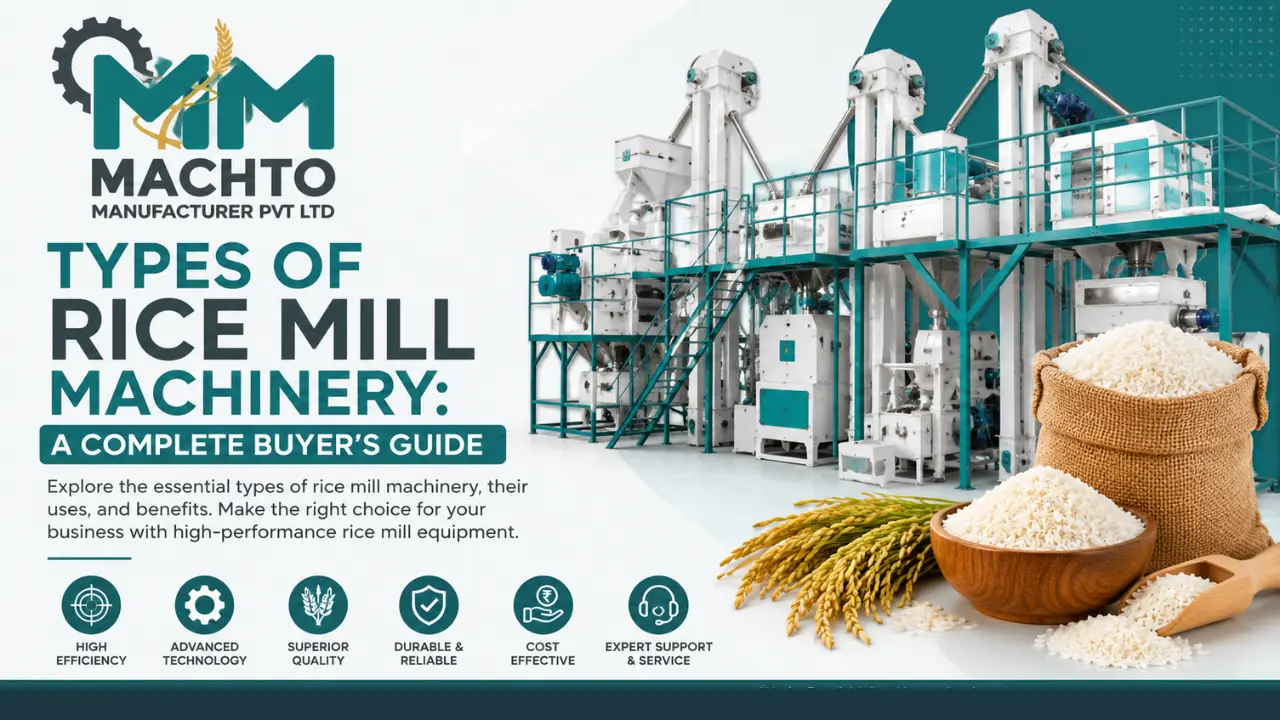
Rice is amongst the top food grains that are consumed across the globe, and India is known to be one of the leading countries when it comes to producing and exporting rice. In order to cater to the demands of high-quality rice, rice mills use advanced machines which help increase productivity, reduce grain breakages, and provide quality output.
If you are looking forward to either setting up a new rice mill or improving an already existing rice mill, then it is important for you to have knowledge about the types of rice mill machinery available in the market. In this comprehensive buyer’s guide, we will take a look at some of the types of rice mill machinery and how to select rice milling equipment.
What is Rice Mill Machinery?
Rice mill machinery refers to a range of machines and equipment used to convert raw paddy into edible rice through various processing stages. Modern rice mills utilize automated systems that increase efficiency, improve rice quality, and minimize wastage.
The primary objective of rice milling is to remove the husk and bran layers from paddy while preserving the maximum amount of whole rice kernels. Today, advanced rice mill equipment plays a vital role in achieving consistent quality and higher production capacity.
Also Read: What is a Biomass Pellet Machine and How Does It Work?
Why Choosing the Right Rice Mill Machinery Matters
The performance of a rice mill largely depends on the quality and efficiency of the machinery installed. Investing in the right equipment offers several benefits:
- Higher milling efficiency
- Better rice quality
- Reduced grain breakage
- Lower operational costs
- Increased production capacity
- Improved profitability
- Consistent output quality
Selecting the appropriate machinery is therefore a critical decision for every rice mill owner.
Rice Mill Machinery List: Essential Machines Used in Rice Processing
A modern rice mill consists of multiple machines working together to process paddy into finished rice. Below is a comprehensive rice mill machinery list commonly used in rice mills.
1. Paddy Cleaner
The paddy cleaner is the first machine in the rice milling process.
Its purpose is to remove:
- Dust
- Straw
- Stones
- Sand
- Foreign materials
Clean paddy improves milling efficiency and protects downstream equipment from damage.
2. Destoner Machine
A destoner separates stones and heavy impurities from paddy using differences in weight and density. This machine is essential for maintaining product quality and preventing equipment wear.
3. Paddy Husker
The paddy husker removes the outer husk layer from the grain. This machine is one of the most important pieces of rice mill equipment because proper husk removal directly affects milling performance and rice quality.
4. Paddy Separator
After husking, some grains remain unhusked. A paddy separator separates brown rice from unhusked paddy and sends the remaining paddy back for reprocessing.
5. Rice Whitener
The rice whitener removes bran layers from brown rice. This process transforms brown rice into white rice while maintaining grain integrity.
6. Rice Polisher
The rice polisher enhances the appearance of rice by improving its shine and smoothness. Polished rice generally has higher market value and consumer appeal.
7. Rice Grader
The grader separates rice based on size and quality.
It classifies:
- Whole rice
- Broken rice
- Small fragments
Proper grading helps improve product consistency and marketability.
8. Color Sorter Machine
Modern rice mills increasingly use color sorters to remove discolored, damaged, or defective grains.
Benefits include:
- Improved rice quality
- Better export standards compliance
- Increased customer satisfaction
9. Rice Packing Machine
The final stage involves packaging the finished rice into bags for storage and distribution. Automatic packing systems improve efficiency and reduce labor requirements.
Types of Rice Mill
Understanding the various types of rice mill systems can help buyers choose the most suitable setup based on production requirements and budget.
Traditional Rice Mill
Traditional rice mills use basic machinery and manual operations.
Advantages:
- Lower investment cost
- Suitable for small-scale operations
Limitations:
- Lower efficiency
- Higher grain breakage
- Reduced output quality
Semi-Automatic Rice Mill
Semi-automatic mills combine manual handling with mechanized processing.
Advantages:
- Moderate investment
- Improved efficiency
- Suitable for medium-scale production
Fully Automatic Rice Mill
Fully automatic rice mills use advanced automation throughout the production process.
Advantages:
- High production capacity
- Reduced labor dependency
- Consistent product quality
- Higher profitability
Integrated Rice Mill Plant
Integrated plants combine all processing stages into a single streamlined system. These facilities are ideal for commercial rice production and export-oriented businesses.
Best Rice Mill Machinery in India
The demand for the best rice mill machinery in India continues to grow as rice processors seek higher productivity and better quality standards.
When selecting machinery, buyers should prioritize:
- Build Quality- Machines should be manufactured using high-quality materials for long service life and reliability.
- Milling Efficiency- High milling efficiency reduces grain loss and increases profitability.
- Energy Consumption- Energy-efficient systems help lower operating costs.
- Automation Features- Modern automation improves consistency and production control.
- Maintenance Requirements- Low-maintenance machinery reduces downtime and repair expenses.
- Technical Support- Reliable after-sales service and spare parts availability are essential for smooth operations.
The best rice mill machinery combines durability, performance, and operational efficiency.
Key Factors to Consider Before Buying Rice Mill Equipment
Investing in rice mill machinery requires careful planning.
- Production Capacity- Determine daily production requirements before selecting equipment.
- Budget- Consider both initial investment and long-term operating costs.
- Available Space- Ensure the facility can accommodate the selected machinery layout.
- Product Quality Goals- Different markets may require different processing standards.
- Automation Level- Choose between manual, semi-automatic, and fully automatic systems based on operational needs.
- Future Expansion- Invest in machinery that can support future business growth.
Advantages of Modern Rice Mill Machinery
Modern rice milling technology offers numerous advantages compared to conventional processing methods.
- Higher Productivity- Automated systems process larger quantities of paddy in less time.
- Better Rice Recovery- Advanced equipment minimizes grain breakage and improves rice yield.
- Consistent Quality- Modern machinery ensures uniform processing and grading.
- Reduced Labor Costs- Automation reduces dependence on manual labor.
- Improved Food Safety- Advanced cleaning and sorting systems help maintain hygiene standards.
- Increased Profitability- Higher efficiency and better product quality contribute to greater returns on investment.
Why Choose Machto Manufacturer Pvt. Ltd.?
At Machto Manufacturer Pvt. Ltd., our primary objective is to develop rice milling machines that can cater to the ever-changing demands of the industry. With a strong emphasis on engineering prowess and quality services for our clients, we provide them with effective rice mill equipment, which helps them enhance their efficiency and profitability.
In case you are starting out in rice milling or upgrading your rice milling machinery, Machto Manufacturer Pvt. Ltd. is always ready to help you in all possible ways.
Conclusion
Choosing the right rice mill machinery is one of the most important decisions for any rice processing business. Understanding the complete rice mill machinery list, evaluating different types of rice mill, and investing in high-quality rice mill equipment can significantly improve production efficiency and product quality.
As the demand for premium rice continues to increase, modern rice mills must adopt advanced technology to remain competitive. By selecting the best rice mill machinery in India, businesses can achieve higher productivity, reduced wastage, and long-term profitability.
A well-planned investment in modern rice milling equipment not only improves operational performance but also positions a rice mill for sustainable growth in today’s competitive market.