As we look for cleaner energy options and cheaper fuels, biomass pellets are stepping up as a green choice over fossil fuels. More businesses and power plants are using this stuff because it doesn’t break the bank and is good for the planet. At the center of all this is the biomass pellet machine – it turns crop and tree leftovers into dense fuel pellets.
As businesses look for cleaner energy options, understanding how a pellet machine works becomes essential. Whether you are an entrepreneur planning to enter the biomass industry or an industrial user looking for efficient fuel solutions, learning about pellet production can help you make informed decisions.
What is a Biomass Pellet Machine?
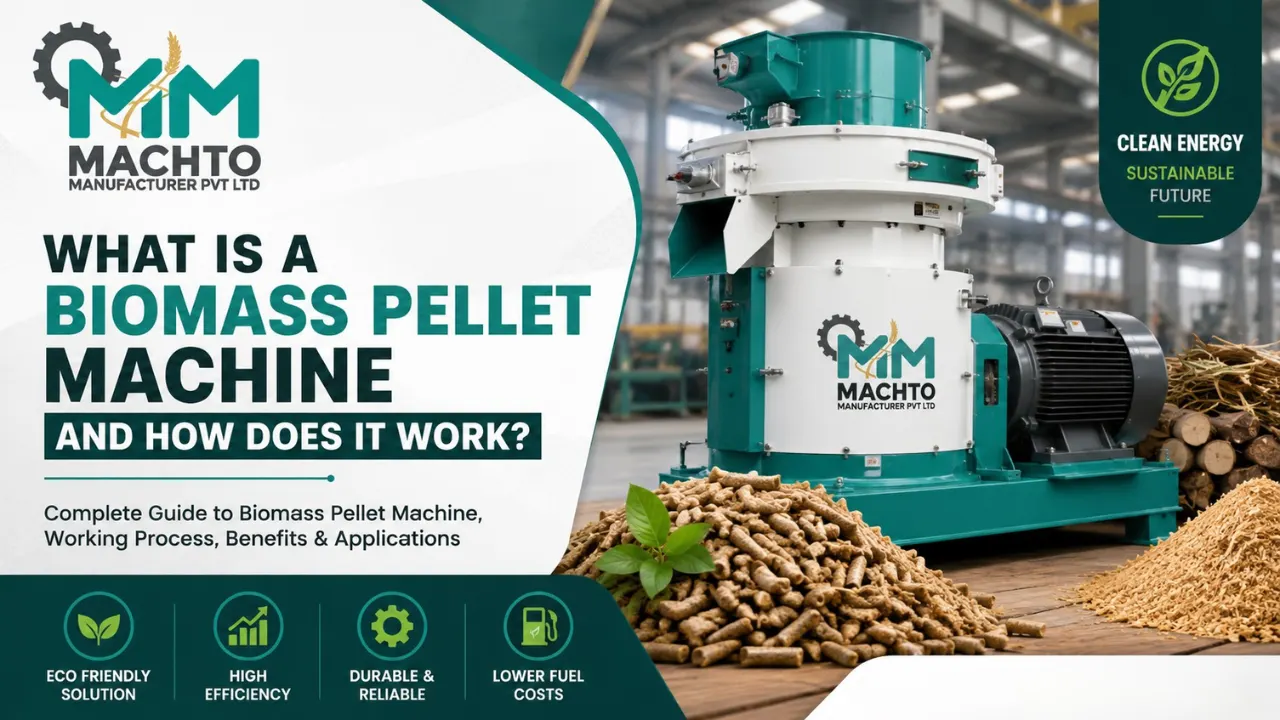
A biomass pellet machine is an industrial machine that compresses organic materials into compact cylindrical pellets. These pellets are commonly used as fuel in industrial boilers, power plants, heating systems, and various manufacturing processes. The machine transforms low-density biomass materials into high-density fuel pellets, making storage, transportation, and combustion much more efficient. A modern pellet making machine is capable of processing different types of biomass materials while maintaining consistent pellet quality. The growing focus on renewable energy has significantly increased the demand for biomass pellet production systems across India and many other countries.
Also Read: How Paddy Pre Cleaner Machines Improve Grain Quality by Removing Impurities
What Are Biomass Pellets?
Before understanding the machine’s working process, it is important to know what a biomass pellet actually is. Biomass pellets are small compressed fuel units manufactured from agricultural residue, wood waste, and other organic materials. These pellets offer high energy density and cleaner combustion compared to many conventional fuels.
Common raw materials used for producing biomass pellets include:
- Sawdust
- Wood chips
- Rice husk
- Paddy straw
- Wheat straw
- Sugarcane bagasse
- Groundnut shells
- Cotton stalks
- Agricultural waste
These materials are widely available and often considered waste products, making biomass pellet production both economical and environmentally responsible.
Why is Biomass Pellet Production Important?
The increasing demand for renewable energy has made biomass pellets an important fuel source for industries worldwide. Unlike fossil fuels, biomass pellets are produced from renewable resources and help reduce carbon emissions. Some major advantages of using a biomass pellet fuel system include:
- Reduced dependence on fossil fuels
- Better utilization of agricultural waste
- Lower greenhouse gas emissions
- Cost-effective industrial fuel
- Improved energy efficiency
- Cleaner combustion process
These benefits have encouraged many businesses to invest in modern pellet machine technology.
How Does a Biomass Pellet Machine Work?
The working process of a biomass pellet machine involves several stages. Each step plays a crucial role in ensuring high-quality pellet production.
1. Raw Material Collection
The process begins with collecting biomass materials such as sawdust, rice husk, crop residue, and wood waste. The quality of raw material directly affects the quality of the final pellets. The selected material should be free from excessive impurities and foreign particles to achieve efficient pellet production.
2. Drying Process
Moisture content is one of the most important factors in pellet manufacturing. Excess moisture can reduce pellet quality and production efficiency. The raw material is dried to achieve the optimal moisture level before entering the pelletization process.
3. Grinding and Size Reduction
Large biomass particles are processed through grinding equipment to create a uniform particle size. This step improves pellet density and ensures smooth operation of the pellet making machine. Uniform particle size also helps produce stronger and more durable pellets.
4. Pelletizing Process
This is the core stage where the biomass pellet machine converts processed biomass into compact pellets. The material enters the pellet chamber, where rollers force it through specially designed dies under high pressure. The natural lignin present in biomass acts as a binding agent, eliminating the need for chemical additives in most cases. As the material passes through the die holes, dense and uniform pellets are formed.
5. Cooling Process
Freshly produced pellets are hot and relatively soft. They must be cooled before storage and transportation. Cooling improves pellet hardness and stability, ensuring better handling and longer shelf life.
6. Screening and Packaging
The final pellets are screened to remove dust and broken particles. After quality inspection, the pellets are packaged and prepared for distribution. This final stage ensures consistent product quality and customer satisfaction.
Main Components of a Pellet Making Machine
A modern pellet making machine consists of several important components that work together to produce high-quality pellets.
These components include:
- Feeding system
- Pellet die
- Roller assembly
- Electric motor
- Gearbox
- Lubrication system
- Cooling system
- Control panel
Each component contributes to the overall performance, efficiency, and durability of the machine.
Factors Affecting Biomass Pellet Machine Price
Many buyers often ask about the biomass pellet machine price before investing in equipment. However, the cost varies depending on several technical and operational factors.
The major factors influencing machine pricing include:
- Production capacity
- Automation level
- Machine design
- Die and roller quality
- Motor power
- Raw material compatibility
- Brand reputation
- Energy efficiency features
A higher biomass pellet machine price often reflects better productivity, durability, and long-term operational savings.
Applications of Biomass Pellets
The demand for biomass pellets continues to grow due to their versatility and environmental benefits.
Biomass pellets are widely used in:
- Industrial boilers
- Thermal power plants
- Food processing industries
- Textile manufacturing units
- Chemical industries
- Commercial heating systems
- Renewable energy projects
Their consistent combustion characteristics make them a reliable fuel source for various industrial applications.
How to Choose the Right Pellet Machine?
Selecting the right pellet machine requires careful evaluation of production requirements and business objectives. Before purchasing a machine, consider the following:
- Type of biomass material available
- Desired production capacity
- Budget and investment plan
- Energy consumption
- Maintenance requirements
- Machine durability
- Technical support availability
Choosing a machine that matches your operational needs can significantly improve productivity and profitability.
Why Choose Machto Manufacturer Pvt. Ltd.?
Machto Manufacturer Pvt. Ltd. specializes in manufacturing advanced biomass processing equipment designed to deliver reliable performance and long-term efficiency. Our machines are engineered using high-quality components and modern technology to meet the growing demands of the renewable energy sector.
Whether you require a compact pellet making machine or a large-scale biomass pellet machine, we provide customized solutions tailored to your production requirements. Our commitment to quality, innovation, and customer satisfaction makes us a trusted partner for biomass pellet manufacturing projects.
Conclusion
A biomass pellet machine plays a crucial role in converting agricultural and forestry waste into valuable renewable fuel. By transforming low-density biomass into high-energy pellets, these machines help industries reduce fuel costs and support sustainable energy practices.
As demand for clean energy continues to rise, investing in the right pellet machine can provide significant long-term benefits. Understanding the working process, applications, and factors affecting biomass pellet machine price allows businesses to make informed investment decisions. With the right equipment and proper planning, biomass pellet production can become a profitable and environmentally responsible venture.