Pneumatic Rubber Sheller Manufacturers
Machto Manufacturer Pvt. Ltd. provides rice processing machinery solutions for commercial milling applications. As Pneumatic Rubber Sheller Manufacturers, we focus on equipment suitable for paddy husking requirements, helping rice processing units select machinery according to their production capacity, grain variety, and plant configuration.
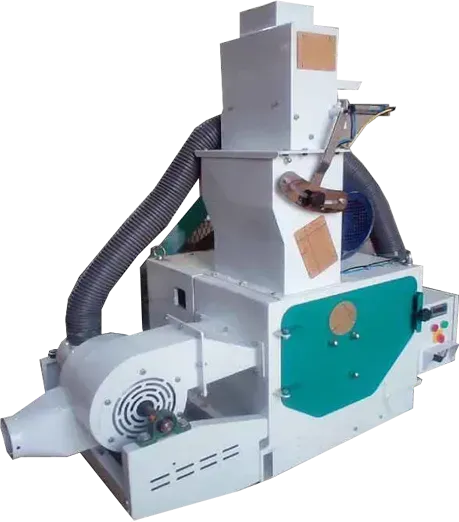
Pneumatic Rubber Sheller Machine for Rice Mills
A pneumatic rubber sheller is used to remove the outer husk from paddy before the rice enters the next processing stage. Unlike equipment that uses abrasive surfaces for husking, this machine uses two rubber rollers to create the friction required for separating the husk.
The rollers rotate in opposite directions and at different speeds. When paddy passes between them, the difference in roller movement helps loosen and remove the husk from the grain.
The machine is generally used after paddy cleaning and before paddy separation. The husked rice and remaining unhusked paddy can then be handled by suitable separation equipment according to the rice mill’s processing arrangement.
For rice mill owners, selecting the right sheller involves understanding the paddy type, required output, roller specifications, and the operating conditions of the milling line.
Where Is a Pneumatic Rubber Sheller Used?
- Rice Milling Plants: Installed in the husking section to remove the outer husk from cleaned paddy.
- Basmati Rice Processing: Used for husking paddy before subsequent rice separation and milling operations.
- Non-Basmati Rice Mills: Suitable for processing different paddy varieties when the machine is configured for the required operating conditions.
- Commercial Rice Processing Units: Used as part of a production line that includes paddy cleaning, husking, separation, whitening, and grading.
- Rice Mill Expansion Projects: Can be considered when a processing facility upgrades or adds equipment to its husking section.
Working Principle of a Pneumatic Rubber Sheller
The shelling process begins when cleaned paddy enters the machine through its feeding system. The feeding arrangement distributes the paddy towards the rubber rollers.
Two rubber rollers rotate in opposite directions. Their speed difference and the pressure applied during operation create the friction needed to remove the outer husk.
As the paddy moves through the roller gap, the husk separates from the grain. The resulting material contains husked rice, unhusked paddy, and separated husk, which are handled through the appropriate downstream equipment.
The shelling result depends on the condition of the paddy and the adjustment of the machine. Roller gap, roller speed, feeding rate, and rubber roller condition all influence the process.
Proper adjustment is important because excessive pressure or unsuitable operating conditions may increase grain breakage, while incorrect settings can reduce husking effectiveness.
Important Components of a Pneumatic Rubber Sheller
The working performance of a pneumatic rubber sheller depends on the condition and coordination of its main components.
- Rubber Rollers: These are the primary working components responsible for removing the outer husk. Their condition and surface quality influence the shelling process.
- Paddy Feeding System: Distributes paddy towards the roller gap and supports a controlled material flow.
- Pneumatic Pressure Arrangement: Supports the roller pressure adjustment in machines designed with pneumatic control.
- Roller Gap Adjustment: Helps set the clearance between rollers according to paddy characteristics and operating requirements.
- Drive System: Provides the movement required for the rollers to rotate at their specified speeds.
- Discharge Arrangement: Directs the processed material towards the next stage of the rice milling line.
The specifications and arrangement of these components may vary according to the machine model and manufacturer.
If you are searching for Pneumatic Rubber Sheller Manufacturers in India, consider the machine’s working arrangement, roller specifications, processing requirements, and compatibility with your existing rice mill before making a purchase decision.